

Getting started
A helpful place to start.
A relaxed, child-friendly way to understand where your child is doing well, where they would benefit from support, and what would help most next.
How it works
Five straightforward steps.
We talk first
A short conversation about how your child is getting on, what you have noticed, and what you would like to understand better.
A friendly assessment
Short, structured activities rather than a formal test. Nothing to revise for, and no pass or fail.
Strengths and gaps
I look at what is already secure and where a little more practice would make the biggest difference.
Feedback for you
A straightforward summary in plain English, with no jargon and no long report you will never read.
Suggested next steps
Practical things to try at home, and an honest view on whether regular tutoring would be worthwhile.
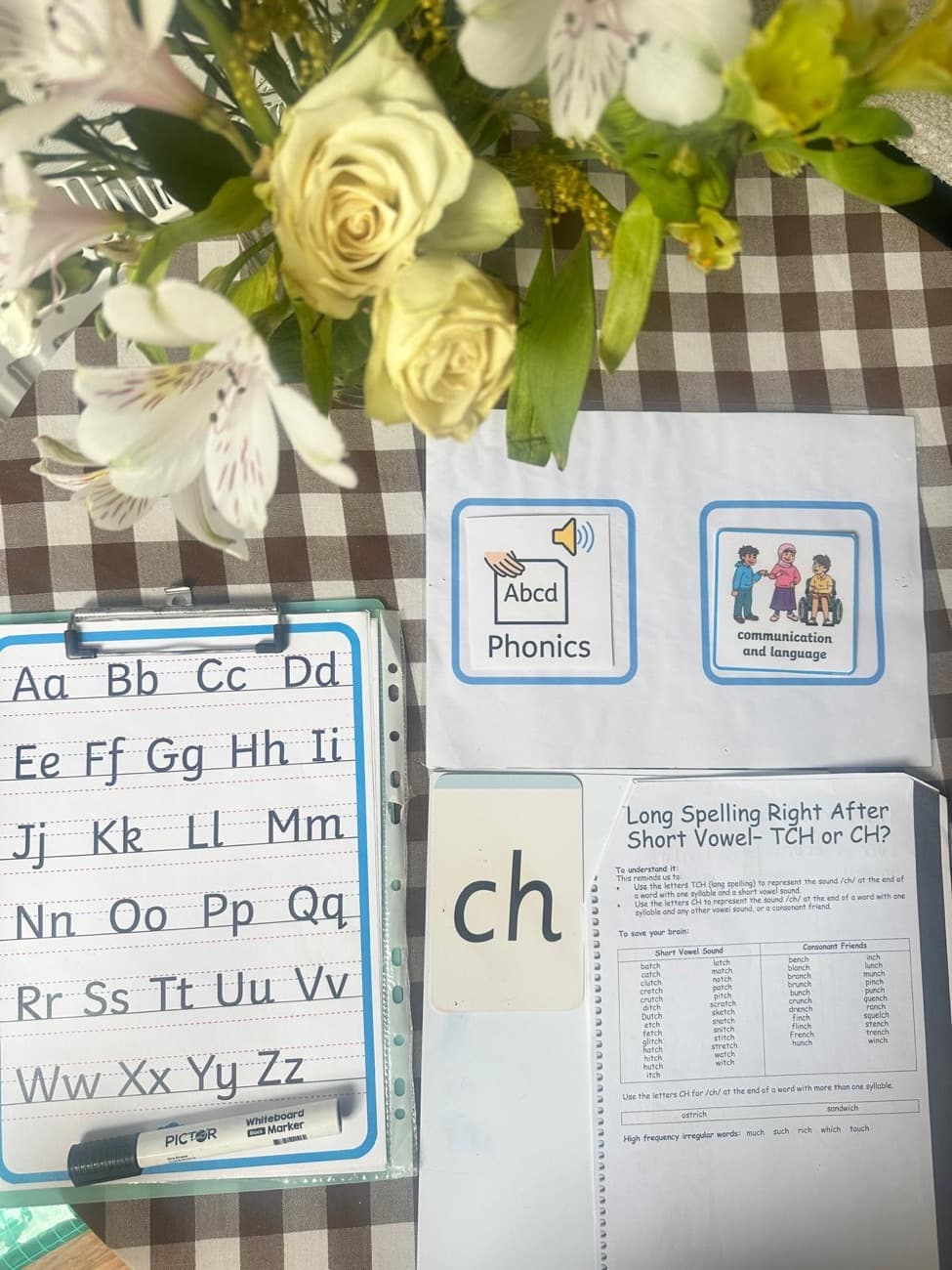
What's included
What you get from it.
- A short conversation with you beforehand
- A friendly, low-pressure assessment with your child
- A clear summary of strengths and areas to build on
- Practical next steps you can use at home
- A recommendation on whether tutoring would help, and what it would focus on
Cost
The assessment.
Phonics & learning assessment
A friendly starting point: a short assessment, clear feedback and practical next steps.
- A short conversation with you beforehand
- A friendly, low-pressure assessment with your child
- A clear summary of strengths and areas to build on
- Practical next steps you can use at home
- A recommendation on whether tutoring would help, and what it would focus on
Rate
£30
one-off · normally £35
- Session length
- About 45 minutes
- Format
- One session, in the family's home
- Year groups
- Reception, Year 1, Year 2
An educational assessment, not a diagnosis
This is a teaching assessment. It tells us where to begin and what to practise. It is not a medical or clinical assessment, and it cannot identify or rule out a specific learning difficulty. If anything comes up that seems worth exploring further, I will say so and suggest speaking to your child's school or GP.
Would an assessment help?
If you are not sure where to start, this is usually the easiest first step. Ask me about it and we can decide together.